
Contents
How to be the perfect law firm partner
In episode 28 of the Empowering Law Firm Leaders podcast, Simon discusses with Amy Bruce, marketing director at Osprey Approach, the mindsets, behaviours, and disciplines that define a high‑impact law firm partner. Drawing on his latest book, The Perfect Partner, he explains why trust is the currency of influence, how to run partner meetings that deliver results, and the “rails” that keep firms aligned on service, profit, culture and compliance.
In this conversation, Simon McCrum, former managing partner of one of the UK’s fastest-growing law firms and now owner of McCrum Management Consultancy, returns to the podcast to discuss his latest book from his Perfect trilogy.
In this conversation we cover:
- What’s required of a partner
- How to run an effective partner meeting
- The importance of building ‘rails’ for long-term success
- Business development beyond winning new clients
- Empowering the next gen of leaders
Watch the interview with Simon:
Listen to the episode here:


The requirements of a good law firm partner
In a profession that prizes technical excellence, Simon starts somewhere simpler and tougher. “If I was to give a very short answer to your question, what makes a good partner? The answer is: a good human. That’s the beginning.”
Trust, he argues, is the precondition for influence: “Partners are the influencers… How do you become an influencer? The answer is, people have to trust you.” Trust comes from everyday behaviour: “Do you do what you say you’re going to do?” “Do you make false promises?” “Do you have favourites?” These human traits determine whether colleagues will let partners lead them.
Simon’s journey through his book trilogy led him to a blunt conclusion: Partners “govern everything… good or bad,” and even well‑intentioned leaders can steer people the wrong way if they neglect the fundamentals. The decisive shift is from positional authority to personal credibility: “Leadership can arise on the part of a secretary… a partner… can simply fail to attain leadership.” The partner’s job is to make others feel seen, supported and stretched. “When I talk to a manager… I feel like they’re important. When I talk to a leader, I feel like I’m important.”
He also widens the lens beyond fee‑earners. A modern firm relies on business services just as much as lawyers: “Try running a law firm without an IT team… You can always find new lawyers. You cannot find a new practice manager or finance director.” The partnership must win the trust – and discretionary effort – of everyone. That begins with consistent behaviour and ends with shared momentum.
Running partner meetings that deliver, not derail
Most partners “dread the forthcoming partners’ meeting… Here we go again,” says Simon. Why? Because too many meetings lack a north star. “There isn’t a plan… no framework for the meeting.” The remedy begins well before the agenda email. At the start of the year, hold a structured partner brainstorm (call it a strategy day if you must) to identify firm‑wide priorities; then assign leadership for each priority so every meeting becomes a progress review, not a free‑for‑all. “You can’t suddenly say… I’m sending out an agenda. No one’s got anything they believe in.”
Discipline in the room matters just as much. “Give a partner a chance to speak – boom, off you go – and literally, the wheels come off.” Simon advocates real‑time course correction: “Anyone notice what’s just happened. We’ve gone straight off the topic”- and strong facilitation to park side issues. Meetings need leadership: “This meeting isn’t for that… It’s for the things we identified in our brainstorm.” With focus, those meetings become engines of improvement rather than theatres of debate.
This isn’t academic. Firms that embrace structured priorities and commercial discipline can unlock gains. Simon questions timid growth aims: “What’s wrong with 50%? What’s wrong with 100%? And it’s all profit.” The difference, he says, is listening, learning and acting with intent, not tradition.
Setting rails determines your future success
Moonshots aren’t delivered by slogans – they’re delivered by rails. Simon prefers rails to rules because rails are co‑created by partners and leaders. “You can’t impose this stuff on people… Get them to design the rails that we are going to stick on.” Rails define the firm’s way across four dimensions: how we treat our people; how we treat our clients; how we operate (the money); and how we stay compliant and serve our communities. With rails in place, every decision becomes easier: does it fit this way or not?
Rails also demand motion. “Broken‑down trains sit on rails.” Partners must lead along the rails – modelling the agreed behaviours and maintaining momentum at every meeting: “It might be boring – at least for the first 10 years…” The payoff is resilience in a tougher market: rising salaries, tech investment (including AI), and regulatory pressures mean firms “have got to throw money at this problem” of retention and capability, which requires annual growth simply to stand still. Rails keep that growth sustainable and culture‑positive.
Crucially, rails create leadership opportunities at every level. “Lawyers you can get anywhere. Leaders, now we’re talking… I am desperately searching all the time for leaders.” When non‑partners show they can move the firm along the rails, they reveal themselves as the partners of the future.
Changing culture: From silos shared ownership
Toxic traits, silos and the “my client” mentality suffocate growth. Can culture change? Yes – but not overnight. The first step is humility: “Nothing is anyone’s fault… situations have been decades in the making.” Simon’s method is to listen deeply and give people VIP time: “You can’t do it to a room full of people. Listen, talk, understand, explain, then begin to educate… turn the ship around.” Some individuals may still be “so toxic they shouldn’t be there,” but most will move when they’re heard, respected and shown a better way.
Shared ownership of clients follows naturally when the firm is a place people want to stay. Lawyers cling to ‘my clients’ when they’re uncertain about their future. Provide inspiring leadership, annual pay progression, and an academy that makes individuals “a great lawyer and a great person and a great leader,” and the incentive to hoard evaporates.
About the speaker

Simon McCrum is the owner of McCrum Management Consultancy and author of The Perfect Legal Business, The Perfect Lawyer, and The Perfect Partner. A former managing partner of a UK law firm that became the country’s fastest‑growing, he now advises law firms worldwide on leadership, culture, and commercial performance. More insights and book links are available at mccrum.legal.
Appraisals: Where leaders make people great
The simplest test of leadership is often the most neglected: hold the appraisal. “I can’t tell you… the number of partners I’ve met who just haven’t been able to get round to appraisals… because basically, I’m just too busy.” The message to juniors is corrosive, and inconsistency across teams becomes cultural rot. Make appraisals face to face where possible: it signals, “you’re a VIP.” Keep them honest and developmental.
Simon’s own career inflection point began with radical candour: “Simon, you’re a clown.” That uncomfortable truth – paired with sponsorship and guidance – helped him become a non‑fee‑earning equity partner who “went on to bring in many millions of pounds every year for the firm.” The real winner of great appraisals? The business. Leaders use these moments to raise standards, accelerate growth and build future partners.
Empowering the next generation of law firm leaders
With AI everywhere, Simon argues the leadership gap is EI – emotional intelligence – and time at the elbow. “There’s plenty of lawyers sat giving advice… using ChatGPT to work out what the advice should be.” But wisdom comes from dismantle‑and‑rebuild learning with seniors: “You were dismantled. And rebuilt. That made for great lawyers.” Hybrid work and tech trends mean leaders must now go out of their way to coach: “Half an hour at the end of the day… is just part of life… Partners have got to find more time to make people great.” Otherwise, we risk “a load of ChatGPT lawyers” without judgement, nuance or client care.
The call to action is human and hopeful: dish out “personal magic dust,” make people feel you’ve “got their back,” and design a clear plan so talent sees a future inside the firm, not elsewhere. When leaders do that consistently, the next generation doesn’t just stay, they soar.
The partner mindset that transforms firms
Becoming the perfect partner isn’t about hierarchy, technical brilliance or titles – it’s about humanity, consistency and influence. As Simon repeatedly demonstrates, the most successful partners are those who build trust through everyday behaviours: doing what they say they will, caring about people’s futures, and leading in ways that make others feel important. These traits form the bedrock on which all effective leadership rests, shaping firms where collaboration thrives and talent stays.
Across each theme – from partner meetings to business development, from cultural transformation to next‑generation leadership – the message is clear: sustainable success comes from intention and discipline, not chance. Partners set the tone. Whether designing firm‑wide rails, mining the “gold mine” of existing clients, or giving juniors the VIP time they need to grow, partners create the environment in which excellence can flourish. And when they lead with openness, emotional intelligence and commercial clarity, the entire firm accelerates.
Watch the full interview with Simon McCrum now to discover more advice and guidance on becoming the perfect partner. You’ll also hear Simon’s exclusive advice on the elements of business development partners should focus on and the differences between a leader and a boos.

In conversation with Ian Hopkins: How to build an effective leadership teams within your law firm
Ian Hopkins joined me to discuss how to be an effective leader and build successful leadership teams to future-proof your legal business.
Find Out More
How legal technology and practice management software empower Partners at SME law firms to succeed
Legal technology and practice management software empower partners at SME law firms to enhance leadership and drive success. By automating routine tasks, partners can focus on strategic decision-making and client relationships.
Find Out More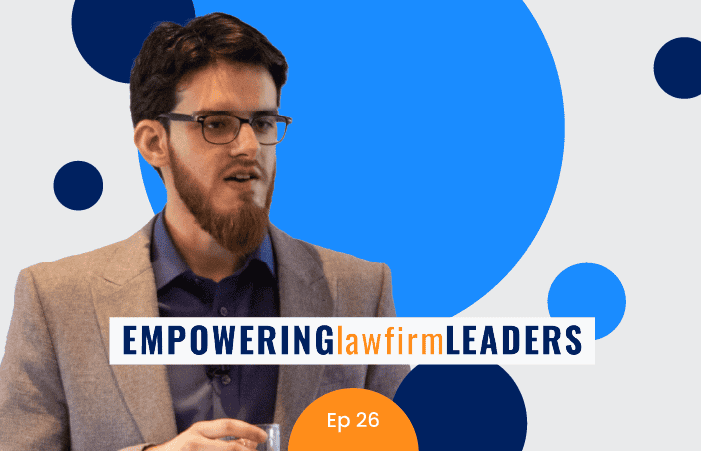
Building strategic differentiation with AI: practical guidance for SME law firms
Uwais Iqbal, founder of Simplexico and former senior data scientist at Thomson Reuters and ThoughtRiver, shares how law firms can build strategic differentiation with AI—covering the mindset, methods and investment choices that help firms move beyond the hype to achieve real outcomes.
Find Out More